.svg)
.svg)

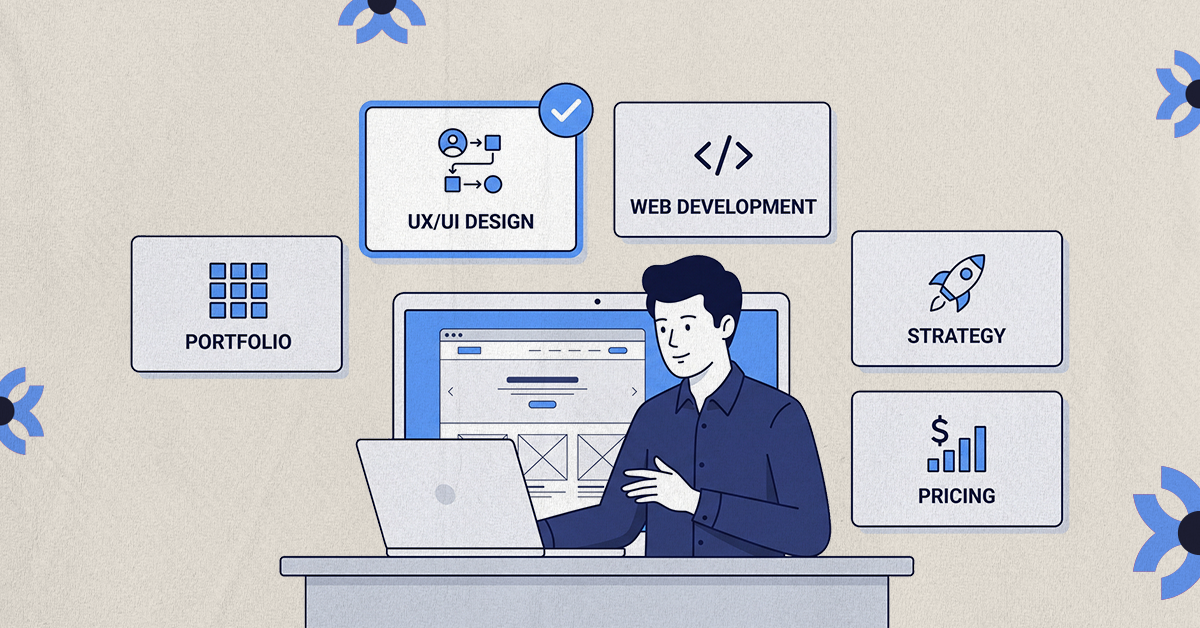
Before hiring a UX audit company, ask about their process, what data the findings rest on, exactly what you receive, whether they have worked with businesses like yours, how they prioritize, who does the work, and what happens after delivery.
A website that looks polished can still lose visitors at every step, and a lot of business owners only find that out after they have already paid for a redesign that did not fix the real problem. Hiring the wrong UX audit company is an easy way to burn budget on a report that sits in a folder and changes nothing.
The good news is that most bad hires are avoidable. A short list of pointed questions, asked before any contract is signed, tends to separate the firms that will hand over a real diagnosis from the ones that will hand over a checklist with your logo on it.
What a UX Audit Actually Involves
.jpeg)
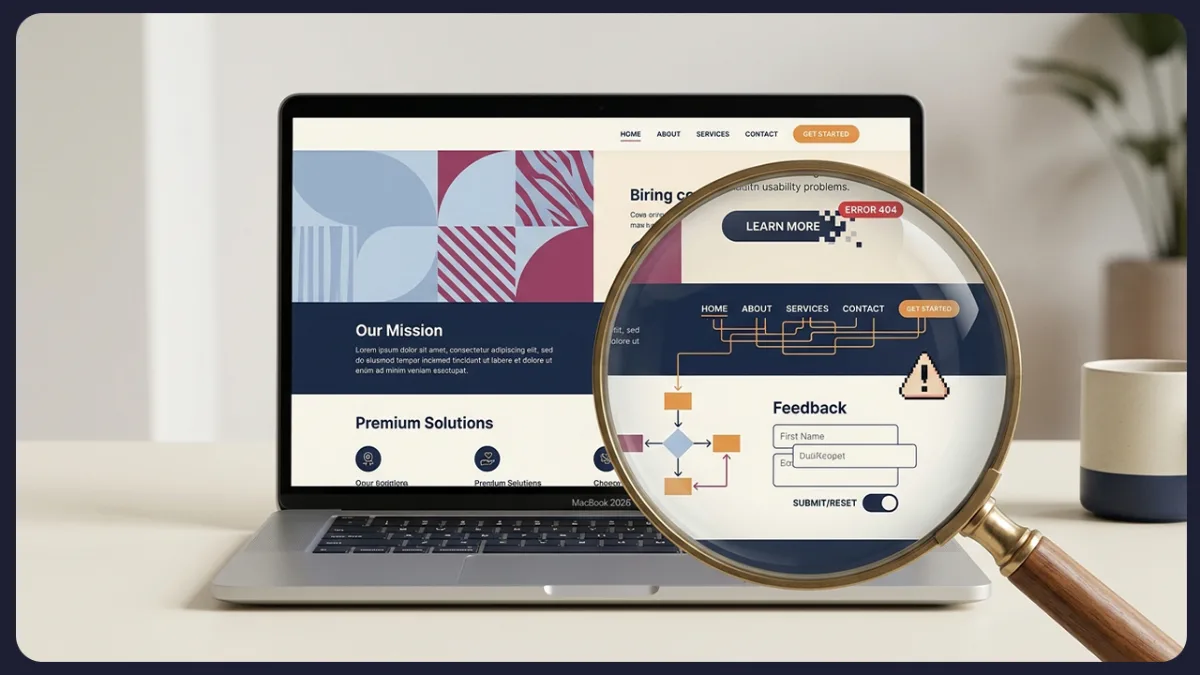
A UX audit is a structured review of how people actually use a website or product, built to surface where they get stuck, confused, or drop off before completing a goal. A credible audit blends expert evaluation against established usability principles, such as Jakob Nielsen's heuristics, with real behavioral data pulled from analytics, session recordings, or direct user testing.
That combination matters. An audit built only on a designer's opinion is closer to a critique than a diagnosis. One built only on analytics can show that people are leaving a page without ever explaining why. The strongest audits triangulate both, and the Nielsen Norman Group has long noted that testing with as few as five real users can uncover the majority of a product's usability problems. A company that skips this step, and simply eyeballs a site before writing recommendations, is not really auditing anything.
Most UX audit companies work with some combination of the following methods, and it helps to know the difference before comparing quotes.
| Audit type | What it uncovers | Typical timeline |
|---|---|---|
| Heuristic evaluation | Interface issues measured against established usability principles, done by an expert without live users | 2 to 5 days |
| Usability testing | How real users actually behave when completing a task, recorded and analyzed | 1 to 3 weeks |
| Analytics and behavioral review | Where people drop off, hesitate, or rage-click, based on existing site data | 3 to 7 days |
| Accessibility audit | Compliance gaps against standards like WCAG, plus barriers for users with disabilities | 1 to 2 weeks |
| Competitive audit | How a site's experience compares to direct competitors on the same tasks | 3 to 7 days |
Why the Wrong Hire Costs More Than the Audit Itself
An audit is meant to save money by preventing a redesign built on guesswork. Choosing the wrong provider does the opposite. Vague findings lead to vague fixes, and vague fixes rarely move a conversion rate. Forrester Research has estimated that every dollar invested in UX can return up to one hundred dollars in value, which is a useful reminder that the audit itself is not the expensive part. The expensive part is acting on bad advice, or on findings too generic to act on at all.
This is also where the agency versus freelancer decision starts to matter. Both can do excellent audit work. The difference usually comes down to depth of process, continuity if a single person is unavailable, and whether the provider has the range to turn findings into an actual redesign afterward.
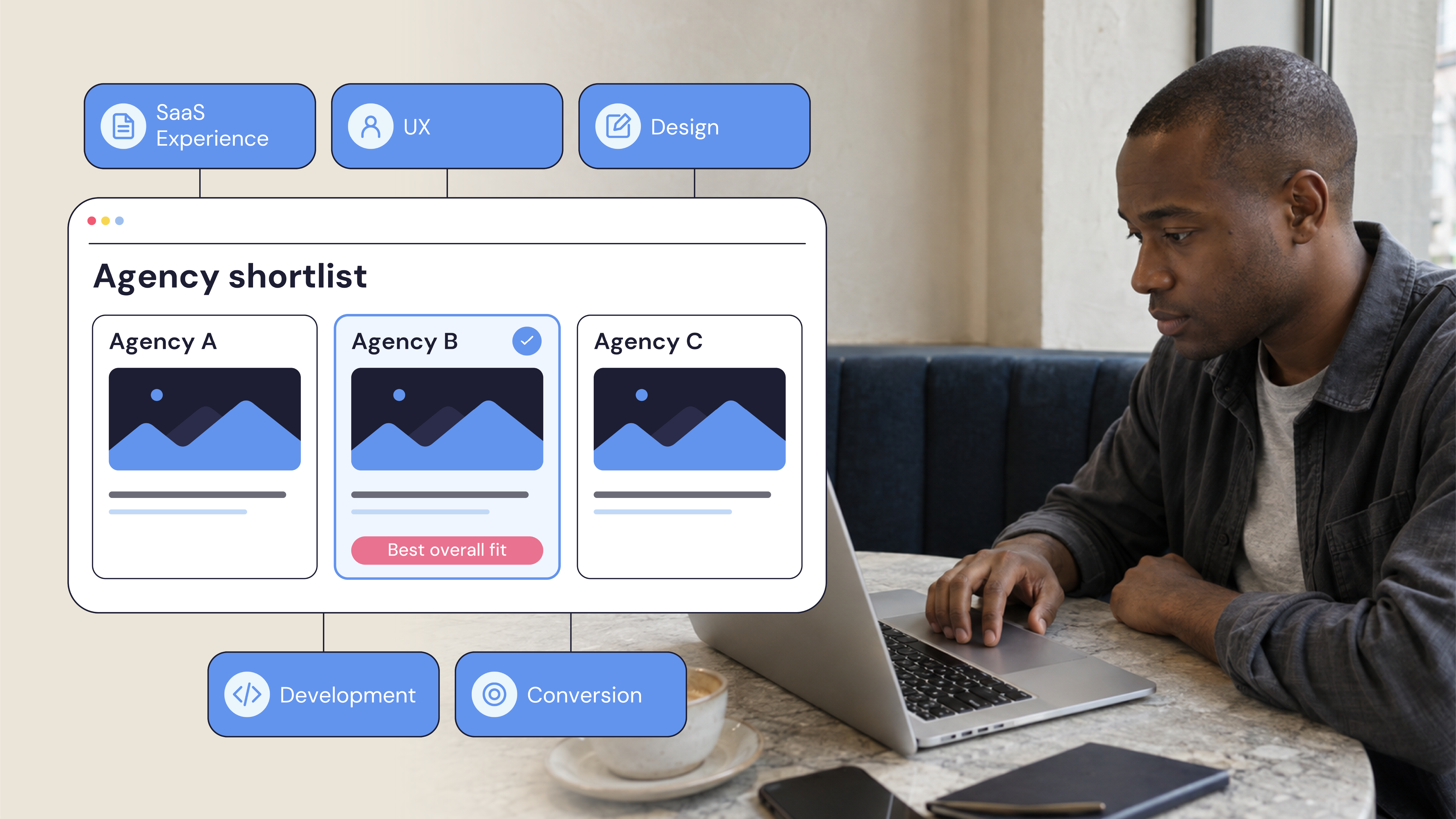
7 Questions to Ask Before You Hire a UX Audit Company
.jpeg)
1. What does your audit process actually look like?
Ask for the process, step by step, not a vague summary. A serious UX audit company should be able to walk through discovery, evaluation methods, and reporting in a few clear sentences without needing to check with someone else.
A strong answer names specific stages: an intake call to define goals and target flows, a heuristic pass against a known framework, a review of existing analytics or user data, and a structured write-up with a fixed delivery date.
A weak answer is a single line about reviewing the website, with no mention of a framework, no reference to data, and no clear sense of how long any of it takes.
2. What data are the findings based on?
Findings should combine heuristic evaluation with real evidence: analytics, heatmaps, session recordings, or usability testing with actual users. A firm that only offers opinion, without pointing to any data source, is selling a subjective take dressed up as an audit.
Ask specifically what tools they pull from. Common answers include Google Analytics or a similar platform for behavioral data, a heatmap or session recording tool for qualitative signals, and moderated or unmoderated usability testing for direct observation. A provider that cannot name a single tool is likely working from instinct alone.
3. What exactly is in the deliverable?
A report can mean many different things. Ask whether it includes severity ratings, annotated screenshots, specific screens or flows referenced by name, and a prioritized list of fixes. A findings document without prioritization leaves a business exactly where it started: with a long list and no clear starting point.
It also helps to ask for a sample report, even a redacted one from a past client. A provider confident in the quality of their work will usually have one ready to share. One that hesitates or stalls is worth a second look.
4. Can you show examples of audits for businesses like ours?
Request examples relevant to the industry or platform in question. A company that has audited eCommerce checkout flows brings different instincts than one that mostly works on SaaS onboarding. This is also where a provider's track record speaks louder than a sales pitch. NUUX has seen this play out directly: an audit-informed rebuild of a hospitality client's ordering flow and marketing funnel helped drive six figures in new revenue within the first year.
If a provider cannot show comparable work, ask what they would do differently for an unfamiliar industry. A thoughtful answer about adapting their process is a better sign than a confident answer with nothing to back it up.
5. How will you prioritize what you find?
Every audit surfaces more problems than any team can fix at once. Ask how issues get ranked, whether by potential impact on conversion, by effort to fix, or by some other framework. A provider without a clear prioritization method is handing over homework instead of a plan.
Common frameworks worth listening for include severity scoring (critical, moderate, minor), an impact versus effort matrix, or a direct tie to business metrics like drop-off rate on a specific step. Any of these signals a repeatable process rather than a one-off opinion.
6. Who on your team will actually work on this?
Agencies pitch with senior staff and sometimes staff projects with someone more junior. Ask directly who will run the audit, what their background is, and whether that person will also be reachable for questions afterward.
This question also surfaces continuity risk. A solo freelancer who gets sick or takes on another client mid-project can delay delivery with no backup. A larger team should be able to explain who steps in if the primary contact is unavailable.
7. What happens after the audit is delivered?
A report that ends the relationship is only half useful. Ask whether the company offers implementation support, a follow-up review after changes go live, or ongoing UX optimization. The businesses that get the most from an audit tend to treat it as the start of a process, not a one-time deliverable.
It is also worth asking directly what percentage of past clients moved from audit into implementation with the same provider. A high number suggests the findings were specific enough to act on. A low number is worth asking about.
Red Flags Worth Walking Away From
A few warning signs tend to repeat across bad hires.
- No documented process, or an answer that changes each time it is asked
- No willingness to share past work, even a redacted sample
- Pricing with no explanation of what it covers
- A promise of a finished report within a day or two for a full site
- Recommendations that read like generic best practices rather than anything specific to the site being reviewed
- No mention of data sources, only opinion
- Reluctance to name who will actually do the work
Any one of these on its own is not disqualifying. Two or three together are worth taking seriously before signing anything.
What a UX Audit Actually Costs
.jpeg)
Pricing varies more than most buyers expect, and the spread is rarely about report length. Industry pricing research from Eleken and Orbix Studio puts most UX audit engagements between $1,000 and $25,000, with enterprise-scale or heavily regulated products reaching $30,000 to $75,000.
| Provider type | Typical cost range | Best fit |
|---|---|---|
| Freelancer | $1,000 to $8,000 | A single flow, tight budget, limited scope |
| Boutique or specialist agency | $3,500 to $18,000 | Full-scope audits with testing and a prioritized roadmap |
| Enterprise or research institution | $30,000 to $75,000+ | Large, regulated, or highly complex products |
The gap usually comes down to three things: who performs the work, how deep the research goes, and what the final deliverable actually includes. A freelancer running a focused heuristic review on one or two flows sits at the lower end. A specialist agency running usability testing, accessibility review, and a full prioritized roadmap sits closer to the top.
The lesson is not to chase the lowest number. It is to ask what a given price actually buys, using the seven questions above, before comparing quotes side by side.
How to Compare Quotes Side by Side
Once a few proposals are in hand, comparing them fairly takes more than lining up totals. A few checks make the comparison more accurate.
Confirm the number of flows or screens each quote actually covers, since a lower total sometimes means a narrower scope rather than a better deal. Ask whether usability testing with real users is included or offered as an add-on, since that single line item explains a large part of any price gap. Check whether the deliverable includes prioritization or only a list of observations. Finally, ask how revisions to the report are handled if a finding needs clarification after delivery.
A quote that looks expensive on paper sometimes turns out to be the more efficient option once scope is matched apples to apples.
How NUUX Approaches a UX Audit
At NUUX, every audit starts with the same principle behind the user journey work built into our process: understand what a visitor is actually trying to do before deciding what to change. Findings get tied to specific screens and flows, ranked by impact, and handed over with a plan a team can act on the same week, not a document that needs translating before anyone can use it.
That approach is also why audits at NUUX rarely end at the report. Recommendations connect directly into redesign, conversion rate optimization, or ongoing support, depending on what a business actually needs next.
Want results like this
Your website should make money, not excuses. Let us find the revenue hiding in your current experience.
FAQs
Quick answers to the questions we hear most about website conversion and UX design.
Most UX audits cost between $1,000 and $25,000, depending on scope and provider. Enterprise or heavily regulated products can run $30,000 to $75,000.
A focused audit on one or two flows can take a few days. A full-scope audit with usability testing and accessibility review typically takes two to six weeks.
A UX audit is a broader evaluation that can include usability testing as one of its methods, alongside heuristic evaluation and analytics review. Usability testing on its own only covers direct observation of real users.
Yes, in most cases. An audit identifies documented problems so a redesign fixes what is actually broken instead of what a team assumes is broken.
A strong report includes severity ratings, annotated screenshots or screen references, and a prioritized list of recommendations, not just a list of observations.
Choosing a UX audit company comes down to one thing: finding a team that can show its work, back its findings with evidence, and hand over something a business can actually act on. Ask the seven questions above before signing anything, and the risk of paying for a report that goes nowhere drops sharply.
Related articles
More field notes on conversion, UX, and building websites that sell.