.svg)
.svg)

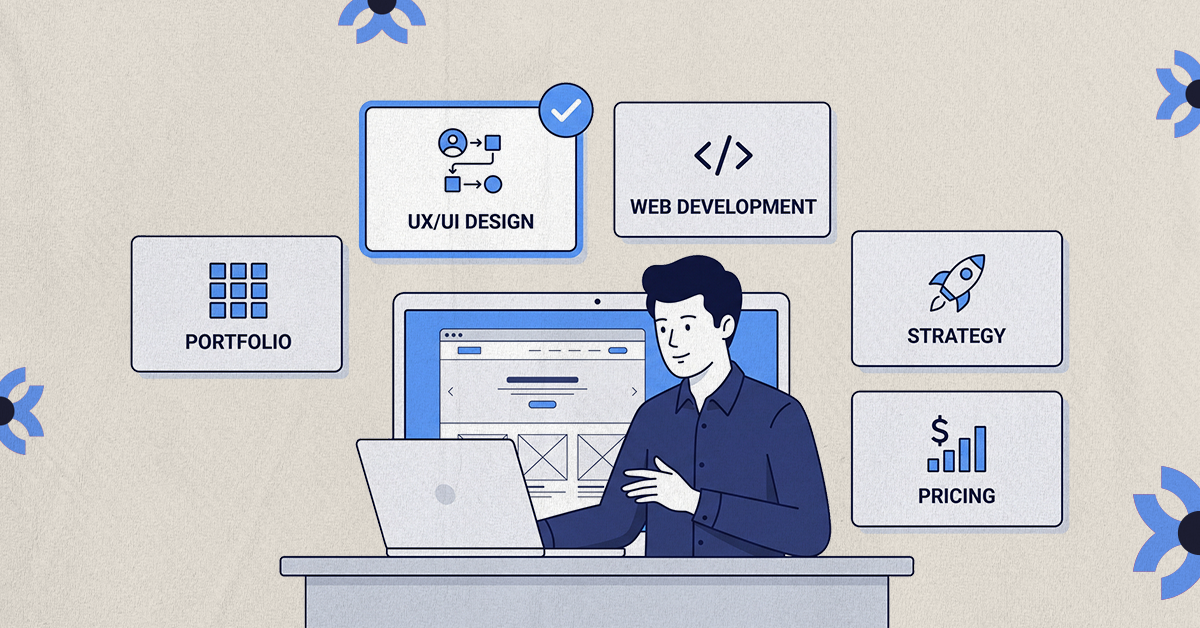
A startup can have a strong product, a good offer, and a team ready to grow, yet still end up with a website that does very little for the business.
The problem often starts before the first page is designed. An agency may focus on layouts, colors, and visual polish without first understanding what the business sells, who it needs to reach, or what visitors should do once they arrive.
That makes choosing a website design agency less about finding the most impressive portfolio and more about finding the right working partner.
The cheapest agency is not automatically the best value. The biggest portfolio is not automatically the most relevant. And a beautiful website is not necessarily a website that will help a startup generate leads, earn trust, explain its product, or support growth.
The right agency should understand the business, its audience, its goals, and its stage of growth. This guide breaks down what to look for, how to evaluate portfolios, which questions to ask before signing, what can affect the cost, and the warning signs that should make a founder reconsider.
What Should You Look for in a Startup Website Design Agency?
The right agency should understand more than website design. For a startup, the agency also needs to work within changing priorities, limited resources, launch deadlines, and a business model that may still be taking shape.
Has the Agency Worked With Startups Before?
Look for experience with businesses at a similar stage or with similar challenges.
A startup may need to launch an MVP website quickly, adjust its positioning after early customer feedback, support a fundraising push, or expand the site as the product develops.
An agency that has worked in those conditions is more likely to understand why every page cannot become a large project. Early-stage teams often need to decide what matters now and what can wait until the next stage of growth.
This is also why the number of projects in a portfolio should not be the main deciding factor. Three projects involving similar audiences, business models, or growth stages can tell more than dozens of unrelated websites.
Does the Agency Have a Real UX and Strategy Process?
A strong website process should begin before the first visual mockup. The agency should ask about the business, target users, competitors, website goals, and the actions visitors need to take.
For a startup, this matters because assumptions are often still being tested. The website may need to explain a new category, introduce an unfamiliar product, or help visitors understand a value proposition that the business is still refining.
Look for evidence of research, information architecture, user flows, wireframes, and prototyping before visual design begins. A strong UX process for startups should account for these early-stage realities rather than treating the website as a purely visual project.
NUUX takes a discovery-first approach that includes research and wireframing before interface design. This helps establish what the website needs to do before deciding how each page should look.
Can One Team Handle Both Design and Development?
Separating design and development can work, but it adds another handoff to the project. For a startup working against a launch deadline, that can create avoidable delays when designs need to be adjusted during development.
A team that can carry the project from UX and visual design through development can keep those decisions connected. It also makes it easier to discuss CMS requirements, integrations, responsive behavior, performance, and future changes while the site is being designed.
This can be particularly useful when the website needs to launch alongside an MVP or product release. The site should support the current stage without creating unnecessary work when the startup moves into its next one.
NUUX combines website design and development, allowing those parts of the project to be handled as one connected process.
Does the Agency Think About Conversion and Business Goals?
A startup website should have a job.
That might mean generating demo requests, sign-ups, purchases, enquiries, downloads, or helping potential customers understand a new product.
The agency should be able to explain how its design decisions support that goal.
For a startup, conversion thinking also means understanding what visitors need before they are ready to take action. A new product may need more explanation, trust signals, product education, or proof than an established brand with years of recognition.
If every conversation is about making the website look modern, but nobody asks what the website needs to achieve, the process is missing an important part of the work.
How to Evaluate a Website Design Agency's Portfolio
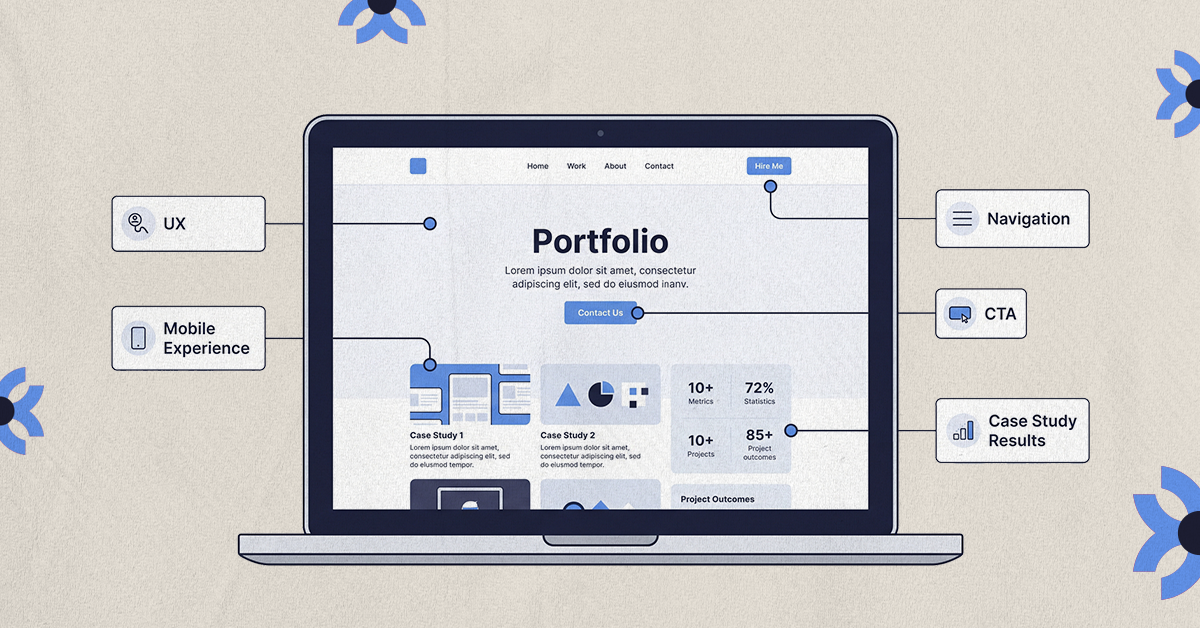
A portfolio should be treated as evidence of how an agency solves problems, not simply as a collection of attractive screens.
Look Beyond the Visuals
When reviewing a project, examine:
- How the website communicates the offer
- Navigation and information hierarchy
- Calls to action
- Mobile experience
- The user journey
- Page structure
- Consistency across the site
For a startup, pay particular attention to how quickly the website explains what the company does and why it matters.
A new company usually cannot rely on years of brand recognition to fill gaps in its messaging. The website needs to do more of that work.
Look for Relevant Case Studies
A portfolio full of polished websites is not enough. Prioritize case studies with similar audiences, business models, products, or goals.
Case studies can show how an agency worked through a real business problem. NUUX's case studies include projects such as AMAX Insurance and Chin Chin.
The Chin Chin project is a useful example because the work extended beyond visual design. NUUX rebuilt the website in Webflow, created a connected ordering experience, and implemented cross-domain tracking. The project generated more than $150,000 in online revenue within its first year.
For a startup evaluating agencies, details like these matter because they show what the agency actually contributed to the business rather than simply displaying the final interface.
Ask What the Agency Actually Did
A case study should make it possible to understand:
- The original problem
- The agency's approach
- What was redesigned or built
- Why important decisions were made
- What happened after launch
This is particularly important for startups because an agency may become involved at different stages.
A founder should know whether the agency handled strategy, UX, content structure, visual design, development, testing, or only one part of the project.
Questions to Ask a Website Design Agency Before Hiring Them
A proposal can look polished and still leave important questions unanswered. The conversation before signing a contract is the opportunity to find out how the agency actually works.
“How do you approach a new website project?”
Look for a structured process.
A strong answer should explain what happens from discovery through launch and where strategy, content, UX, design, development, testing, and feedback fit into the process.
If the conversation immediately jumps to colors, layouts, or animations without discussing the business, that is worth questioning.
“How do you learn about our users?”
The agency should have a way of understanding the target audience.
Depending on the project, this might involve reviewing existing data, speaking with stakeholders, analyzing competitors, studying existing user behavior, conducting research, or testing prototypes.
The method matters less than whether user needs actually influence the design.
“Who will actually work on the project?”
Clarify:
- Designers
- UX specialists
- Developers
- Project manager
- Who the main point of contact will be
Also ask whether the people presented during the sales process will be the people doing the actual work.
Knowing who is responsible for what can prevent communication problems later.
“What happens after launch?”
The launch should not necessarily be the end of the relationship.
Ask about:
- Website maintenance
- Updates
- Technical support
- Optimization
- Future improvements
Some agencies offer ongoing support, while others hand over the finished website and close the project.
For a startup expecting its website to evolve alongside the business, ongoing website maintenance can be just as important as the initial design and development work.
NUUX, for example, offers ongoing website updates and maintenance options after launch, so founders can choose continued support rather than treating launch as the final interaction.
“How will you measure whether the website is successful?”
A good answer should go beyond "it will look better."
The agency should connect success to the purpose of the website.
Depending on the startup, that could involve enquiries, demo requests, sign-ups, purchases, engagement with important pages, or other meaningful business actions.
The specific measures will vary, but the agency should be able to explain what success means before the website goes live.
How Much Does It Cost to Hire a Website Design Agency for a Startup?
There is no single price for a startup website because the scope can vary significantly from one project to another.
Agency pricing can be affected by:
- Scope
- Number of pages
- UX research
- Custom design
- Development
- CMS
- Integrations
- Copy and content
- SEO
- Post-launch support
A five-page marketing website with an existing brand and straightforward CMS requirements is a very different project from a startup website that requires user research, custom interactions, a complex content structure, integrations, and ongoing optimization.
The best way to compare proposals is therefore to look at what is included rather than comparing the final price alone.
Check whether research, strategy, design revisions, development, CMS setup, content support, SEO considerations, testing, launch support, and maintenance are included or charged separately.
Don't Choose an Agency Based on Price Alone
The cheapest agency does not necessarily offer the best value.
The most expensive agency does not necessarily offer the best fit either.
Instead, compare:
- Process
- Relevant expertise
- Deliverables
- Communication
- Development capabilities
- Timeline
- Post-launch support
- Overall project scope
A lower quote can become expensive if important work is excluded and has to be added later. Likewise, paying more does not make sense if the agency's experience does not match the startup's needs.
Which Is Right for a Startup: Agency, Freelancer, or DIY?

There is no universal answer. The right choice depends on the startup's stage, budget, project complexity, and how much support is required.
DIY can make sense when the immediate priority is getting a simple site online with limited requirements.
A freelancer can be a strong option when the project is well-defined and only requires a specific skill, such as visual design, development, or copy.
An agency becomes more useful when the website requires multiple disciplines working together, particularly when strategy, UX, design, development, and ongoing support all matter.
The goal is not to choose the option that sounds most sophisticated. It is to choose the one that matches the actual project. The difference between an agency and freelancer often comes down to the breadth of expertise and support a project requires.
Red Flags to Watch for When Choosing a Website Design Agency
Some warning signs are easy to spot during the hiring process. Others appear when the agency starts talking about the project in very general terms.
- They talk about design before understanding the business. The first conversations should cover goals, users, positioning, and requirements.
- The portfolio looks good but has no case studies. Screenshots do not show how the agency solved the underlying business problem.
- They cannot explain their process. A startup should know what happens from discovery through launch.
- They promise an unrealistic timeline. A fast launch is useful, but UX, content, development, testing, and revisions still require time.
- They avoid discussing mobile, SEO, accessibility, or performance. These should be part of the website conversation from the beginning.
- You do not know who is actually working on the project. The project team and communication structure should be established before work begins.
- They cannot explain what happens after launch. A startup website is likely to change as the business develops.
- Everything revolves around "making it look modern." Visual design matters, but it should support the website's purpose.
The biggest warning sign is replacing a business problem with a visual solution.
A startup should not carry the same website problems into a new design simply because the new version looks better.
A Simple Checklist for Choosing a Startup Website Design Agency

Before hiring an agency, confirm that it:
- Has relevant startup or industry experience
- Understands the target audience
- Has a defined UX and design process
- Can explain its development capabilities
- Has relevant case studies
- Understands the website's conversion goals
- Communicates effectively
- Provides a realistic timeline
- Clearly defines project deliverables
- Explains post-launch support
- Fits the startup's current budget and scope
- Can support the website as the startup grows
How Do You Choose the Right Website Design Partner?
The right agency should understand what the website needs to accomplish, not just what it needs to look like.
For a startup, that means looking at strategy, UX, design, development, communication, scope, speed, and the ability to adapt as the business changes.
A startup does not necessarily need the biggest agency or the largest portfolio. It needs an agency that understands its current stage and can build around the problems the website actually needs to solve.
That might mean launching a focused MVP site now and expanding it later. It might mean investing more heavily in UX because the product is new. It might mean prioritizing speed because a funding or product launch deadline is approaching.
The best agency is ultimately the one that fits the startup's current goals, users, budget, stage, and plans for growth.
Looking for a website design partner for your startup?
NUUX combines UX strategy, website design, development, and growth-focused thinking to build digital experiences around business goals.
Talk to NUUX about your project.
Want results like this
Your website should make money, not excuses. Let us find the revenue hiding in your current experience.
FAQs
Quick answers to the questions we hear most about website conversion and UX design.
Choose a website design agency by evaluating its relevant experience, UX process, portfolio, development capabilities, communication, pricing, and post-launch support.
The cost of a startup website design agency depends on the project's scope, complexity, number of pages, UX research, custom design, development, CMS, integrations, content, SEO, and post-launch support.
A startup should choose between a freelancer and an agency based on project complexity, budget, timeline, and the amount of strategic and development support required.
A startup should ask how the agency approaches new projects, how it learns about users, who will work on the project, what happens after launch, and how website success will be measured.
The time required to build a startup website depends on the project's scope and the agency's process rather than one universal timeline.
Related articles
More field notes on conversion, UX, and building websites that sell.