.svg)
UX Basics: A Complete Guide for Businesses

You invest in marketing. You run ads. You build awareness. People click through, land on your website, and show interest in what you offer.
But interest alone does not guarantee action. A website can look modern and still lose customers.
When information is difficult to locate, when actions are not clear enough, or when the journey feels disconnected, people stop engaging. And every missed interaction becomes a missed opportunity to build trust, generate leads, or convert interest into action.
That is what UX impacts.
Good UX is more than just making a website easier to use. It is about helping people make decisions with confidence. It shapes how your business is perceived, how trustworthy it appears, and whether someone chooses to take the next step or leave altogether.
This guide is for business owners, founders, and decision-makers who want to understand what UX design is, why it matters, and how it directly influences the way their business performs online.
What Is UX Design?
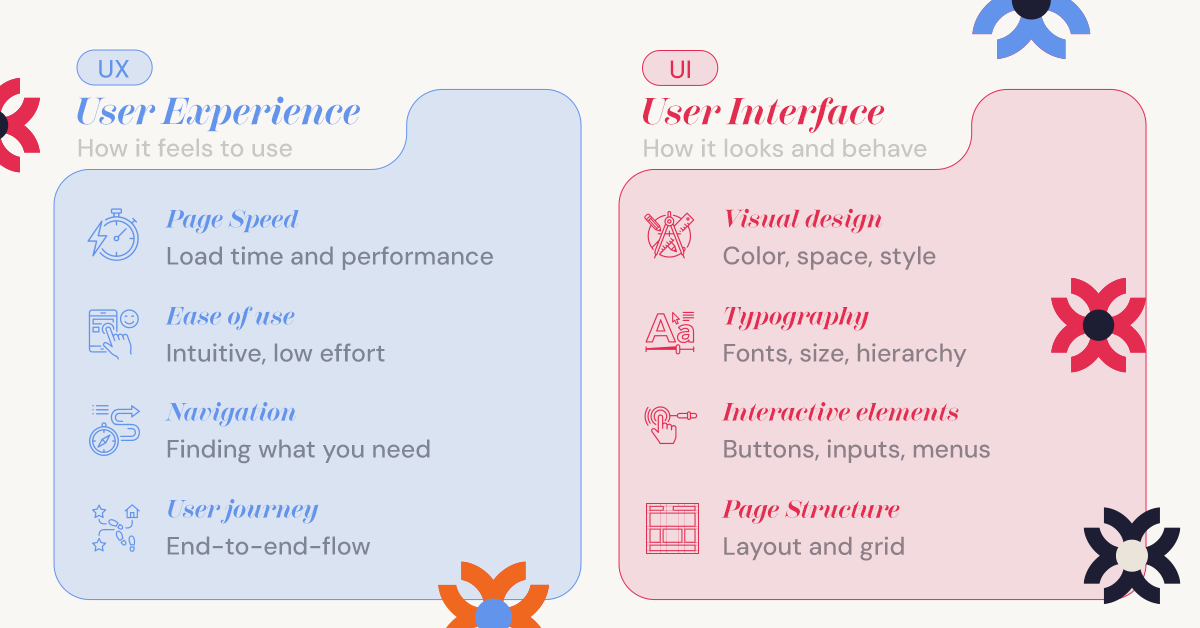
UX stands for User Experience. At its core, it's the experience a person has when they interact with your website, your app, or any digital product you own. And when we say "experience," we mean all of it; how easy it is to navigate, how fast it loads, how clearly information is presented, how naturally someone moves from "I'm interested" to "I'm buying."
Here's an analogy that makes it click: imagine walking into a physical store. The way the shelves are organised, where the signs point, how easy it is to find the checkout; that's UX. The paint color on the walls, the logo above the door, the font on your price tags: that's UI (User Interface). UI is how something looks. UX is how something works.
Both matter. But they're not the same thing. And a lot of businesses focus so much on looking good that they forget to actually work well.
Good UX covers:
- Navigation: Can people find what they're looking for in seconds?
- Page speed: Does the site load before their patience runs out?
- Content clarity: Is the language simple, direct, and free of confusion?
- Mobile experience: Does it work just as well on a phone as a desktop?
- User journey: Does the path from "I'm interested" to "I've taken action" feel smooth and natural?
According to the Nielsen Norman Group; the world's most respected UX research institution, UX design is fundamentally about creating and improving people's experiences with products and services. Notice they said people. Not algorithms. Not stakeholders. People. That distinction matters more than most businesses realise.
Why UX Design Is One of the Best Investments for Your Business
Let’s talk money, because that’s often where the impact shows up first.
Research from Forrester shows that every $1 invested in UX design can generate up to $100 in return. That is a 9,900% ROI. Not a typo. But the value of UX goes beyond numbers. It shapes how people experience your business, how much they trust it, and whether they choose to stay or leave.
The numbers behind poor UX are just as striking. An estimated $1.4 trillion is lost globally every year by businesses whose digital experiences push people away before they take action.
- 70% of online businesses fail primarily because of UX issues, not bad products or pricing.
- Strong UX can increase conversion rates by up to 400%.
These are not abstract design metrics. They reflect how people respond to experiences. When an experience creates friction or delay, people leave. When it is intuitive and well structured, they stay and take the next step.
There is also a UX factor most businesses overlook: visibility. Since 2021, Google has measured user experience as part of its ranking system through Core Web Vitals, tracking how fast your pages load, how stable the layout is, and how responsive it feels. A poor experience does not just affect the people who land on your site. It affects the people who never find you at all.
A good example of what fixing this actually looks like in practice: a hospitality brand came to us with a website that was quietly losing customers at every step. Not because the food wasn't good, not because the brand wasn't strong, but because the online journey was broken. Customers who wanted to order were being redirected to a completely separate platform mid-experience. The flow was disconnected, trust was disrupted, and there was no way to track what was working or where people were dropping off.
The fix was not a rebrand. It was a UX rebuild. One unified ordering flow, full tracking across every touchpoint, and a connected marketing system that could actually be measured. Within the first year, that single shift in experience generated over $150,000 in online revenue. The product had not changed. The audience had not changed. The experience had.
That is what UX investment looks like when it works. It is rarely about making something look better. It is about making it easier for the right person to take the next step.
See how the Chin Chin experience was rebuilt from the ground up.
5 Signs Your Business Has a UX Problem Right Now
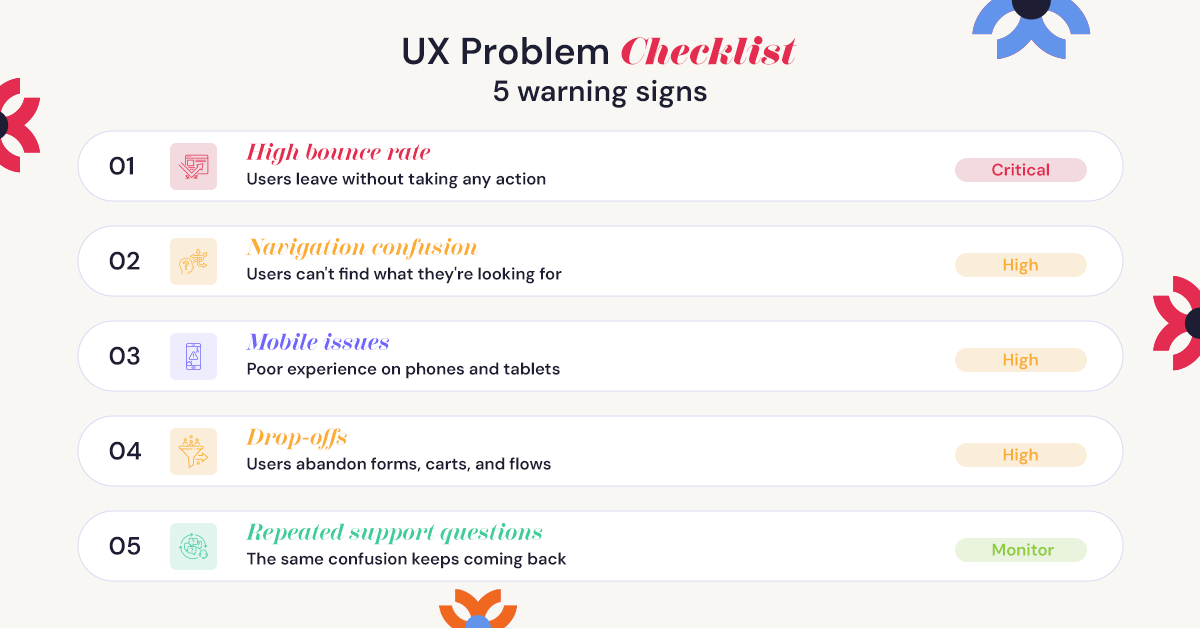
Before you fix UX, you need to recognise where it’s breaking down. Most issues don’t show up as obvious complaints. They show up in behaviour.
People bounce quickly and don’t come back
Visitors land on your site and leave within seconds. This usually means the page isn’t loading fast enough, the message isn’t connecting, or the next step isn’t immediately visible. If people leave before engaging, the experience is stopping them before your product even has a chance.
Visitors can’t find what they’re looking for
If someone has to search, guess, or click through multiple paths to find basic information, the structure isn’t working. Pricing, services, and contact details should be easy to access. The longer it takes to locate them, the more likely people are to leave.
Your site struggles on mobile
Most users are visiting from their phones. If your layout breaks, text becomes hard to read, or buttons are difficult to tap, the experience breaks with it. A site that works well on desktop but not on mobile is losing a large portion of its audience.
Users start actions but don’t finish
People begin filling out forms, starting checkouts, or exploring your services but drop off before completing anything. This often comes down to friction. Too many steps, unclear instructions, or a lack of trust signals can stop users right before conversion.
You keep getting the same support questions
When customers repeatedly ask how something works, where to find information, or what your service includes, your website isn’t doing its job. The answers should already be built into the experience, not left for the user to figure out later.
Each of these signals points to friction in the experience. And friction doesn’t just slow people down. It pushes them away before they take the next step.
The 5 Core Principles of Good UX Every Business Should Know
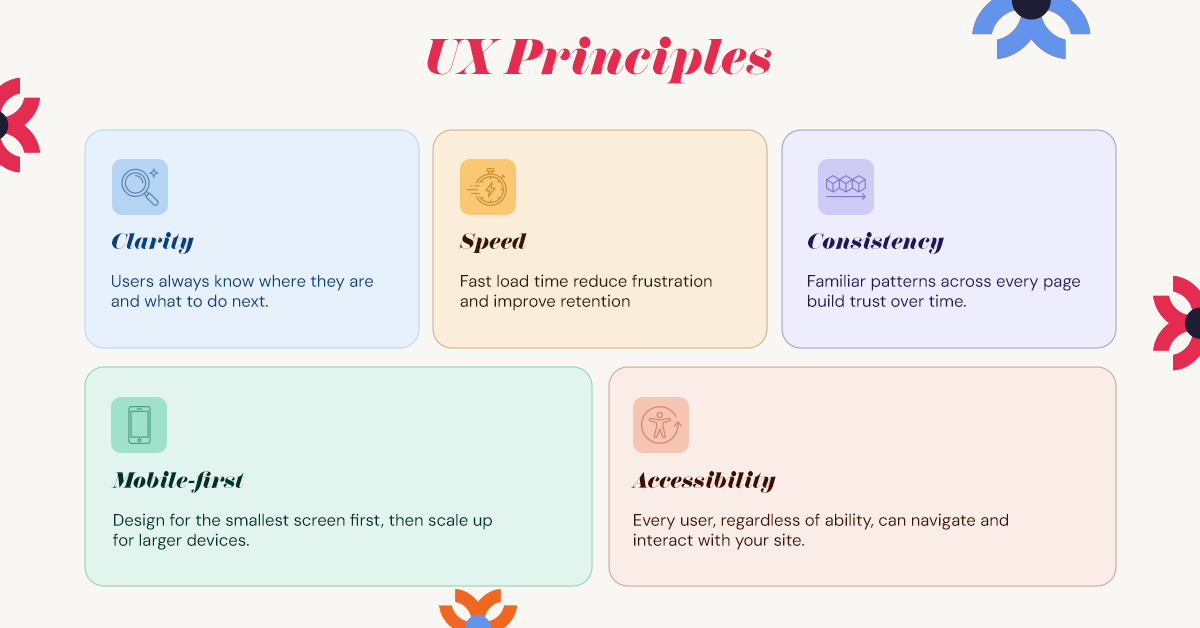
Good UX is not built on guesswork. It is built on a few core principles that shape how people move through your site and decide what to do next.
Clarity
Every page should have one clear purpose and one clear next step. Users should not have to figure out what your business does or where to go next. When messaging, layout, and actions are aligned, people move forward with confidence. When they are not, hesitation sets in, and hesitation leads to a drop off.
Speed
Speed shapes first impressions before anything else. If a page takes too long to load, users leave before they even engage with your content. Even small delays interrupt momentum and reduce the chances of someone completing an action. Faster experiences keep people engaged and moving.
Consistency
Your website should behave the same way across every page. Navigation, buttons, layouts, and tone should not change unexpectedly. Consistency builds familiarity, and familiarity builds trust. When things change without reason, users second guess what they are doing.
Mobile-First
Most people are visiting your site on their phones. A mobile first approach means designing for smaller screens from the beginning, not adjusting later. Content should be easy to read, actions easy to tap, and layouts built for scrolling. If it works well on mobile, it will scale better everywhere else.
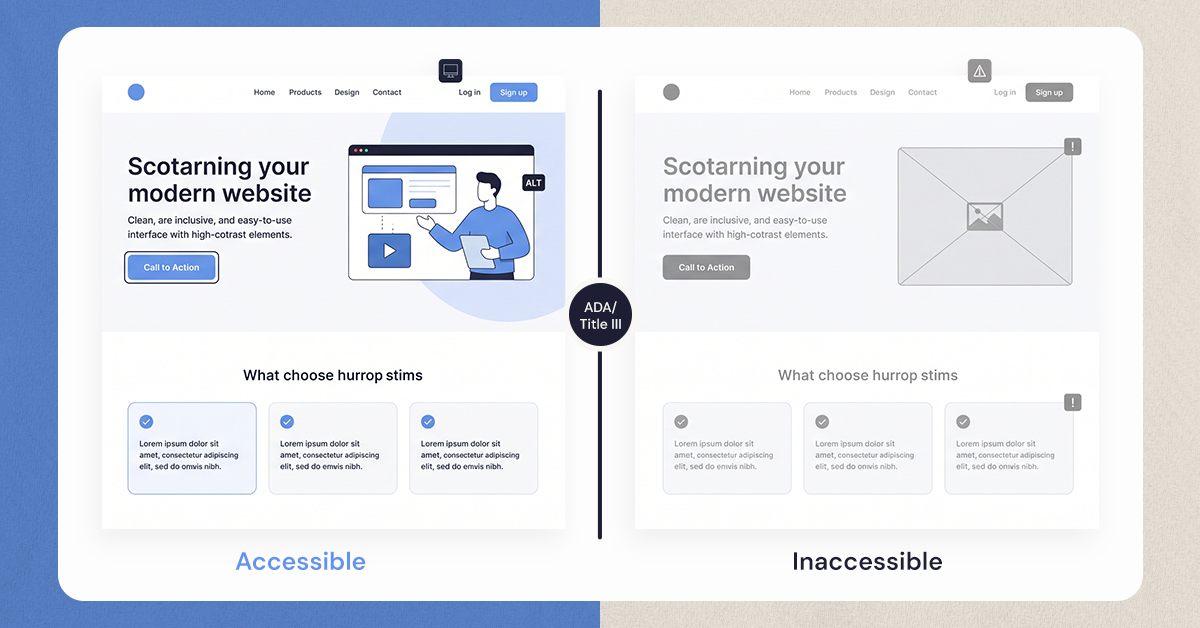
Accessibility
Your website should be usable by as many people as possible. This includes people with visual, motor, or cognitive challenges. Readable text, clear contrast, and simple navigation make a difference. Accessibility also improves overall usability, making the experience better for everyone.
These principles are not optional. They shape how people interact with your site, how they perceive your business, and whether they take the next step.
How to Actually Improve Your Business’s User Experience
You don’t need a design degree to start improving your UX. You just need to know where to look and what to fix first.
Start with a UX audit. This is a structured review of your website to identify where users slow down, get stuck, or leave.
Begin with your data:
- Google Analytics shows which pages people leave quickly, how long they stay, and where they drop off
- Hotjar shows how people behave, including where they click, scroll, or lose interest
Then test with real users.
Ask five people who have never seen your site to complete a simple task, such as finding your services or requesting a quote. Watch how they move through the experience. Every pause, wrong click, or hesitation points to something that needs attention.
Once you can see the issues, prioritise what will have the biggest impact:
- Fix slow pages first. Speed is often the first reason people leave
- Simplify navigation. Make it easy to reach key pages without thinking
- Strengthen your CTAs. The next step should be easy to recognise and act on
- Test on real mobile devices
When improvements start to require bigger changes, that is where working with a UX partner makes the difference. A structured approach, backed by research and testing, turns small fixes into measurable results.
Good UX Isn't Optional Anymore; It's Your Competitive Edge
Customers compare your experience to the best they've ever seen.
Not just your competitors; everyone.
The businesses winning today are the ones that make every interaction feel effortless.
UX is that investment.
And the cost of getting it right is almost always less than the revenue you're losing by getting it wrong.
Ready to find out what better UX could do for your business?
Book a free consultation with NUUX Design Studios.
.svg)


.jpg)
.svg)

.svg)

.svg)
