.svg)
Best Municipal Website Examples in 2026: What Makes a Great City Government Website

How long should it take to report a pothole?
If the answer is more than a few minutes, your city website may already be falling behind.
The best government sites understand that residents don't care about departments, organizational charts, or complicated navigation. They want to complete a task and move on with their day. That's why the best municipal websites 2026 are prioritizing smarter navigation, mobile-first experiences, and resident-focused design.
In this guide, we'll explore what separates great municipal web design from outdated government portals and the features helping cities deliver faster, more accessible digital services.
Why Your City Website Should Feel More Like Netflix Than a Filing Cabinet
The best municipal websites aren't copying entertainment platforms, but they are adopting similar principles. Instead of forcing residents through department directories and organizational charts, modern city websites focus on helping users complete tasks quickly.
This resident-first approach often includes:
- Personalized dashboards with utility accounts, service requests, and local updates
- Context-aware alerts for emergencies, road closures, and service disruptions
- Quick-access links to commonly used services
- Intelligent search tools that anticipate common questions
For example, someone searching for pet registration shouldn't need to know which department manages animal services. A well-designed website guides residents to the right information regardless of the terms they use.
This reflects one of the biggest shifts in municipal web design. Rather than organizing content around government departments, many of the best government sites structure information around services, tasks, and life events. Whether a resident is moving, starting a business, or paying a utility bill, the focus remains on helping them accomplish their goal with minimal effort.
As expectations for digital services continue to grow, search functionality has become one of the most important tools for delivering that experience.
The Search Bar Librarian: How AI Is Ending the Era of Broken Links

For years, city website search bars were known for producing frustrating results.
A search for "fix pothole" might return archived PDFs, meeting minutes, or pages filled with legal terminology. Traditional search systems relied heavily on exact keyword matching, often requiring residents to know the precise language used by the municipality.
Today's search tools are far more effective.
Using technologies such as semantic search and natural language processing (NLP), modern systems focus on user intent rather than exact keywords. Searches like:
- "Hole in my street"
- "Road damage"
- "Pothole repair"
- "Street problem"
can all lead residents to the same reporting service.
Think of it as a digital librarian available 24/7. Instead of requiring users to understand government structures, the search system connects them directly with the information they need.
Many municipalities are also introducing AI-powered chat assistants that help answer common questions, direct residents to services, and improve navigation outside normal office hours.
Of course, even the smartest search tools only work if everyone can use them comfortably. That's where accessibility becomes essential.
The Digital Sidewalk: Why Accessibility Makes Websites Better for Everyone
The best municipal websites are designed for everyone.
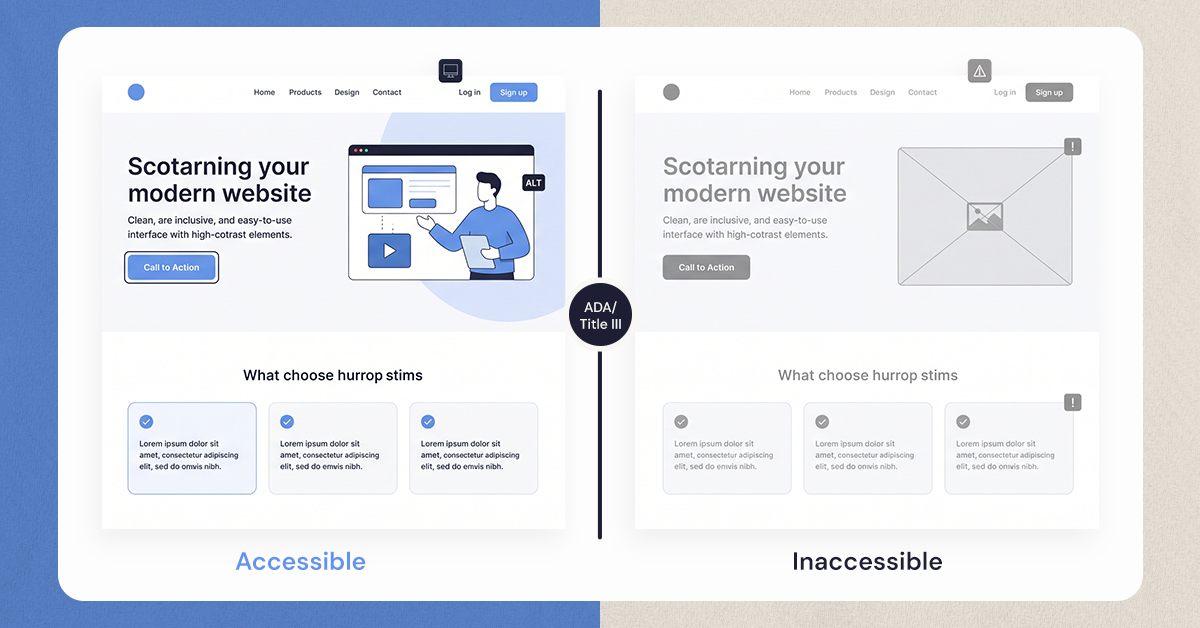
Accessibility standards such as WCAG 2.1 and WCAG 2.2 help ensure websites are usable for people with disabilities, while also improving the experience for all residents.
Common accessibility features include:
- Clear navigation
- Readable text
- High-contrast color combinations
- Descriptive links
- Keyboard-friendly navigation
- Screen reader compatibility
These improvements support users with disabilities while making websites easier to use for seniors, mobile users, and anyone accessing services in challenging conditions.
For example, strong contrast improves readability outdoors, larger buttons make mobile navigation easier, and streamlined layouts help users on slower internet connections.
The strongest examples of municipal web design treat accessibility as a foundation, not an afterthought. As more residents rely on smartphones to access government services, accessibility and mobile usability increasingly go hand in hand.
Permits in Your Pocket: Reducing Friction Through Mobile-First Architecture
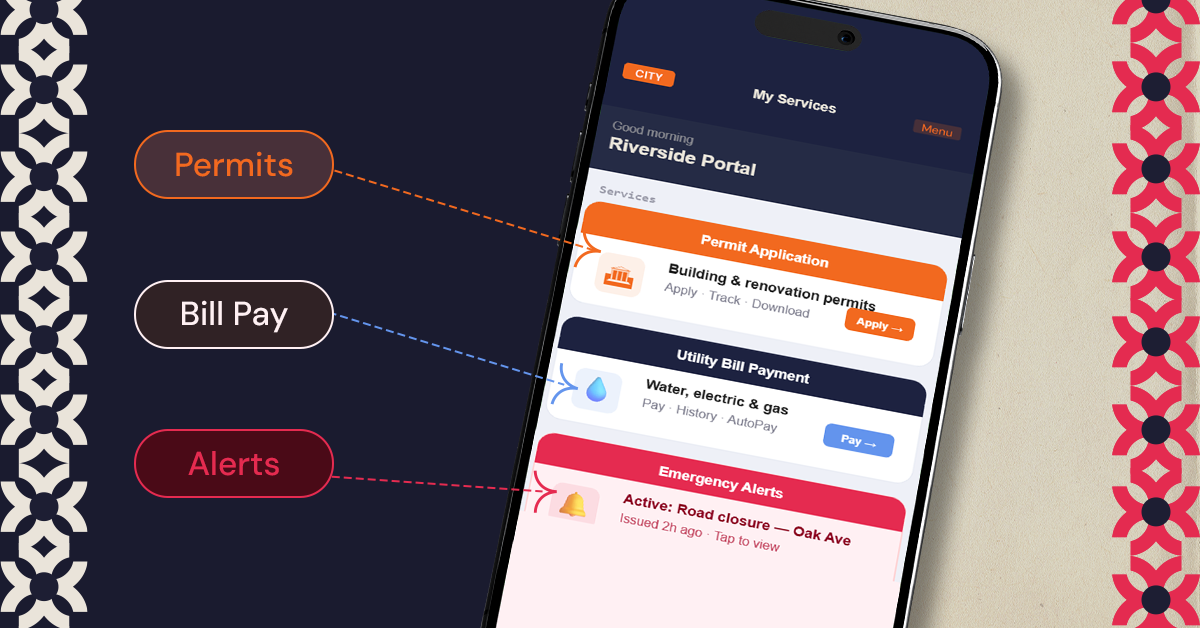
Residents no longer access government websites exclusively from desktop computers. Whether they're reporting a damaged street sign, renewing a permit, or paying a utility bill, many users are doing it from their phones.
That's why mobile-first design has become a fundamental part of modern municipal web design.
Instead of creating a desktop experience and shrinking it down for smaller screens, mobile-first websites are designed around smartphone users from the beginning. Navigation menus, forms, buttons, and content layouts are all built to work seamlessly on mobile devices.
This shift matters because even small inconveniences can discourage users from completing important tasks. Tiny buttons, cluttered layouts, and difficult-to-read documents create unnecessary friction that can quickly lead to frustration.
The best government sites remove those barriers by focusing on:
- Touch-friendly navigation
- Fast-loading pages
- Mobile-responsive forms
- Simple content structures
- Easy document uploads
- Clear calls to action
For example, a resident applying for a permit should be able to complete the process from their phone without needing to switch to a desktop computer. Likewise, someone reporting a local issue should be able to upload photos directly from their device and submit the request in just a few steps.
Mobile-first design also plays an important role during emergencies. Residents often rely on their phones for updates about severe weather, road closures, public safety notices, and service disruptions. If critical information isn't easily accessible on mobile devices, cities risk delaying communication when it matters most.
The municipalities leading the way understand that convenience isn't a luxury, it's an expectation.
2026 Excellence Awards: Lessons From a Global Metro and a High-Tech Small Town
When people think about digital innovation, they often assume only major cities have the resources to build exceptional websites.
In reality, some of the best municipal websites 2026 demonstrates that great digital experiences are more about strategy than budget.
One frequently cited example is Singapore's digital services ecosystem, which organizes many services around life events and resident needs rather than government departments. Instead of asking citizens to navigate multiple agencies independently, services are grouped around common situations such as starting a business, moving, raising a family, or managing healthcare needs.
The concept is simple but powerful: organize information around what people are trying to achieve.
Municipalities around the world are adopting similar approaches. Rather than structuring websites around internal government hierarchies, they're building digital experiences around resident journeys.
Smaller cities and towns are finding success as well.
Many municipalities now rely on government-focused content management systems (CMS) and website platforms specifically designed for local government needs. These solutions often include accessibility tools, service directories, responsive layouts, and resident engagement features without requiring large development teams.
As a result, smaller communities can create highly effective digital experiences that rival those of much larger municipalities.
The lesson is clear: residents don't measure a website by the size of a city's budget. They measure it by how easy it is to use.
Beyond the Homepage: Data Privacy and Transparent Financial Dashboards
A great city website isn't just convenient. It also builds trust.
Residents increasingly use government websites to pay bills, submit applications, manage accounts, and access sensitive information. As digital services expand, protecting user data becomes just as important as providing access to services.
The best government sites make security a priority through features such as:
- Secure encrypted connections
- Multi-factor authentication
- Role-based access controls
- Regular security monitoring
- Strong account protection measures
These safeguards help protect resident information while creating confidence in digital government services.
Transparency is equally important.
Many municipalities are using digital tools to make budgets, spending reports, and financial data more accessible to the public. Instead of publishing large spreadsheets that are difficult to interpret, cities are increasingly using interactive dashboards and visual reports that make information easier to understand.
Residents can often explore:
- Capital improvement projects
- Department spending
- Budget allocations
- Infrastructure investments
- Public performance metrics
When information is presented clearly, residents gain a better understanding of how public resources are being used.
This combination of security and transparency helps transform municipal websites from simple service portals into trusted public resources.
From Frustrated User to Informed Advocate: Your 3-Step Audit for a Better Digital City
The easiest way to understand good municipal web design is to evaluate your own city's website.
You don't need technical expertise to identify whether a platform is serving residents effectively. In many cases, a few simple tests can reveal a lot about the overall user experience.
1. The Search Test
Try finding information about a common service, such as paying a water bill, reporting a pothole, or checking trash collection schedules.
Can you find the answer quickly?
If important information is buried beneath multiple layers of navigation, the website may need improvement.
2. The Mobile Test
Open the website on your smartphone.
Can you easily navigate menus, read content, and complete tasks without zooming in or struggling to tap buttons?
A strong mobile experience is no longer optional for modern municipal websites.
3. The Accessibility Test
Look for accessibility features such as language translation options, readable text sizes, keyboard navigation support, and clear page structures.
Accessible websites serve more residents and create better experiences for everyone.
Final Thoughts
The best municipal websites 2026 has produced all share one common goal: helping residents complete tasks with as little friction as possible.
Whether through intelligent search, mobile-first design, accessibility improvements, stronger security, or resident-focused navigation, today's leading government websites are moving beyond the traditional model of simply publishing information online.
As expectations for digital services continue to evolve, municipalities that invest in thoughtful municipal web design will be better positioned to serve their communities efficiently, transparently, and inclusively.
The future of local government isn't just digital, it's resident-centered. And the best government sites are already showing what that future looks like.
.svg)


.jpg)
.jpg)

.svg)

.svg)

.svg)
